
AI agents: what changes for small businesses now that the big platforms are building their own?
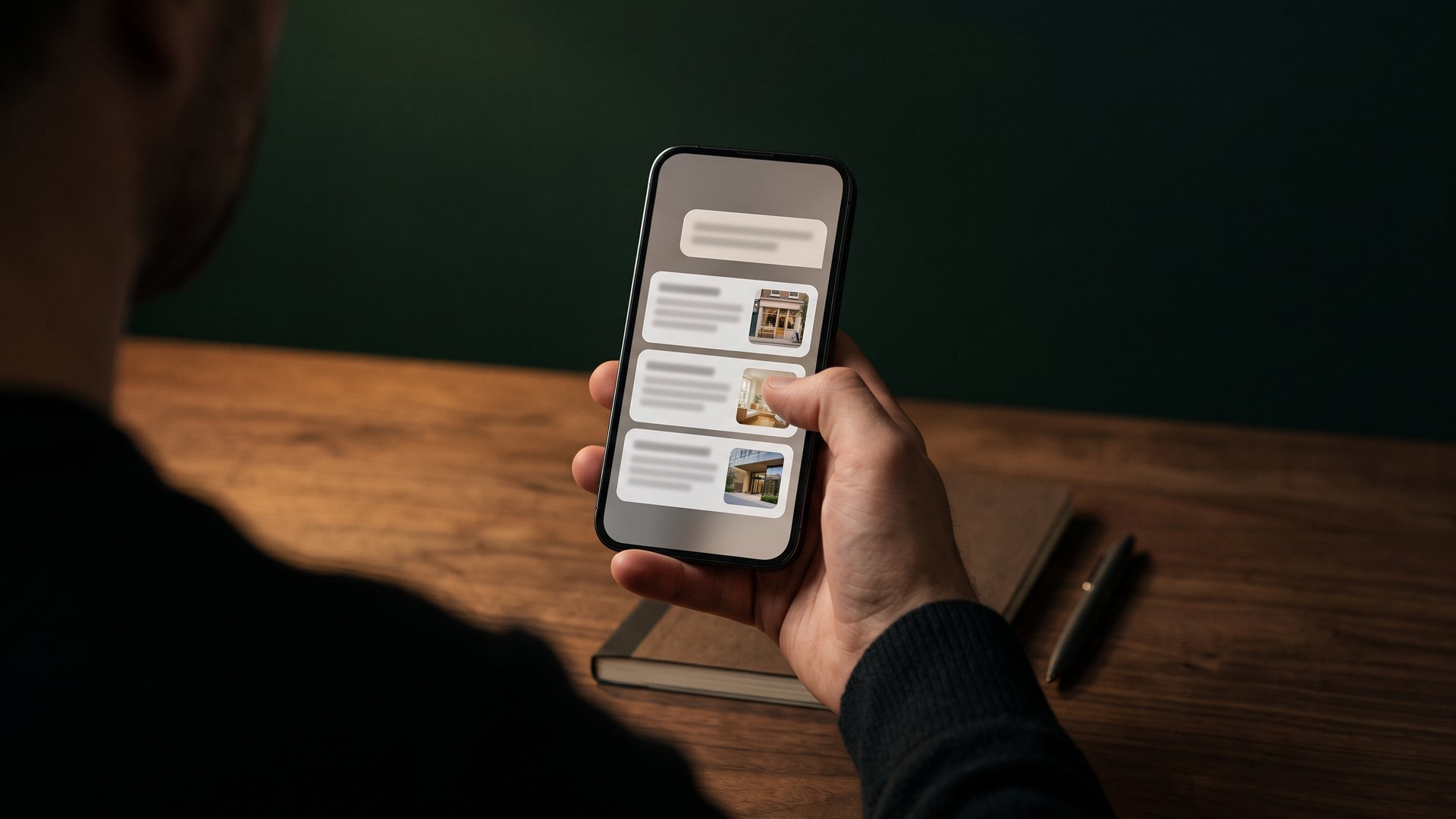
Airbnb, Google and ChatGPT are getting digital assistants that talk to the customer before the business does. What that means for a guesthouse, a restaurant, an estate agency or a shop in Greece
On 5 November 2026, Airbnb announced that it is building its own AI agent, an assistant that will help guests find, compare and book a place to stay. It is not the only one. In real estate, restaurants, groceries and hotels, the big platforms already have or are testing assistants like this, talking to the customer before the customer ever reaches the business.
For a small business in Greece, the question is not whether this will arrive here. It is who the assistant will suggest when the customer asks, and who will answer when the customer wants to book.
What did Airbnb announce?
In its letter to shareholders for the third quarter of 2026, Airbnb writes that it is building its own AI agent to help guests plan and book trips. It plans to start rolling it out in the first half of 2027.
It will not look like a plain chat. The assistant will show the guest maps, photos, comparisons and calendars, depending on what they ask.
One detail is worth noticing. Airbnb itself writes that people don't want to let someone else choose where they stay. So the assistant will not decide for the customer. It will help them compare, but the choice will be the customer's own.
Which other platforms are building AI agents?
Airbnb is not leading the way. It is following others, and the change is not limited to travel.
In real estate. One of the largest property platforms in the US has, since this year, an AI feature inside its app. Buyers and renters ask in plain words, work out what they can afford and book a viewing, without leaving the app.
In restaurants. ChatGPT has been booking tables since August 2026, and it always asks for confirmation before it completes a reservation.
In groceries. One of the world's largest delivery apps is testing an assistant that fills the shopping basket on its own, even from a photo of a handwritten list.
In hotels and local services. In August 2026, Google started booking hotels through the AI mode of its search. In May it had already announced that, in categories such as beauty, home repair and pet care, customers will be able to ask Google to phone businesses on their behalf. Initially, only in the US.
Most of this starts in the US and has not reached Greece yet. Google even writes that some of its hotel-booking features are not available in the European Union. The trend is the same everywhere, though: the customer says what they want, and the assistant searches, compares and suggests a few options. For what exactly an AI agent is and how it differs from a chatbot, we wrote about it in detail here.
What does this mean for a small business in Greece?
When a person searches, they open ten tabs, read, compare, and may stumble on you by chance. A digital assistant does not stumble on anything. It suggests a few options, and it picks them based on what it can read and check: what you offer, where, when you are available, what your customers write.
That means three very practical things, whatever your business:
- Your details must be complete and the same everywhere. On the platforms, on Google, on your website. If your opening hours, services or prices differ from place to place, the assistant has no reason to trust you.
- Reviews matter more than ever. From them, both the customer and the assistant judge how good you are.
- Response speed now counts in the choice. An assistant that books and schedules on the customer's behalf will not wait until the next morning.
For how AI tools find you, and how that differs from classic SEO, see our first article.
Who answers when the customer wants to book directly with you?
Airbnb builds its assistant inside its own app. Google, though, writes that its search brings together the latest prices and availability, with links for the customer to finish booking wherever they prefer. For some categories, it has also announced that it will phone the business itself, and then someone has to answer at the other end of the line. And when the customer wants to ask something they could not find, or to book with you directly, they will visit your website or call you.
That is the moment that decides whether the business is yours. If the customer writes outside your business hours, in another language, and the reply comes the next day, the customer may have already booked somewhere else.
Two solutions we build at Auttomix help here. On your website, an AI Avatar Widget that answers your visitors live, with a face and a voice, 24/7, in any language. And on the phone, an AI Voice Agent that answers incoming calls. For how an assistant like this works on the phone, see this article.
AI in Greek small businesses: where do we stand?
The Greek state has already taken a step. In June 2026, the Ministry of Tourism presented the new VisitGreece.gr, with a digital assistant that suggests destinations, helps plan the trip and also answers by voice.
And Greek businesses? In a National Bank of Greece survey of small and medium-sized businesses in April 2026, almost one in two see that AI could help them manage their customers, but only one in seven already uses such tools. Of all the areas the survey looked at, this was where the gap was largest.
When the big platforms let their assistants talk to the customer first, that gap now matters a lot. The businesses most likely to appear among the few options the customer sees are those that keep their details in order and answer quickly.
Where do you start in practice?
You do not need to wait for 2027. Four things you can do this week:
- Ask AI tools about your business. Type into ChatGPT, or whichever AI tool you use, what one of your customers would search for: your type of business and your area. See who they suggest and what they say about you.
- Check your details on every channel. Opening hours, services, prices, photos, cancellation terms. The same everywhere, and your availability always up to date, because that is what the assistant looks for before it suggests anyone.
- Reply to reviews. All of them, the negative ones too. They are among the few texts about you that both people and AI tools read.
- Count the questions that go unanswered. How many messages and calls were not answered last week, and when they came in. That is where the customers you lose today are, before any AI agent arrives.
Frequently asked questions
What does an AI agent do that a chatbot doesn't? It does not only answer questions. It searches, compares and, where it is allowed, books or schedules on the customer's behalf, usually asking for their confirmation first.
When is Airbnb's AI agent coming? Airbnb plans to start rolling it out in the first half of 2027. It has not said which countries come first.
Are there assistants in Greece that book on the customer's behalf? For now, Greece has assistants that give information, like the one on VisitGreece.gr. Assistants that book usually start in the US, like Google's AI mode, which books hotels.
Should I leave the platforms? No. The platforms will stay a key channel. What changes is that your details, your reviews and how fast you reply matter more, on the platforms and off them.
Is this only about tourism? No. It is about every business that runs on bookings, appointments and customer questions: guesthouses, restaurants, estate agencies, clinics, shops.